好像集训队互测马上要开始了,简单在去年文档的基础上更新一下怎样配置自己的题目。
Qingyu✨'s blog
Blogs
Tags
None
IOI 2027 国家集训队互测 传题指南
By
Qingyu
"GPT 話你知": Thoses tasks surpassed by LLMs
By
Qingyu
We are publishing a list of QOJ problems for which LLMs, mostly GPT, have found solutions that are significantly faster than the authors’ intended solutions. If you would like to submit additional problems for inclusion in this list, please write an editorial on QOJ in the problem forum, mark it as anonymous, and leave a comment below.
- For some of the tasks, LLMs even found mistakes in author's solution. Those tasks are marked with †.
- For some of the tasks, LLM's improvement is especially beautiful. Those tasks are marked with ★, stating Qingyu's recommendation.
| Task | From | Author's Solution | GPT's Solution | Article |
|---|---|---|---|---|
| ★Ascending Matrix | XXI Open Cup, GP of Tokyo | $O(K^4 + K^2(N + M + K))$ | $O(K^2 \log^2 K + N + M)$ | by GPT-6 Pro |
| Harsh Comments | XXI Open Cup, GP of Tokyo | $O(S (N + M)))$ | $O(N + S \log S + M \log^2 M)$ | by GPT-6 Pro |
| Rikka with Lake | XXI Open Cup, GP of Xiaomi | $O(n^4)$ | $O(n)$ | by GPT-6 Pro |
| Make It Divisible | ICPC Asia Hangzhou Regional 2024 | $O(T \sqrt {V} + n \log (nV) + n d(V))$ | $O(n + V^{1/3} \log V)$ | by GPT-6 Pro |
| †Dreamy Putata | ICPC Asia Hangzhou Regional 2023 | $O(qm^3 \log n)$ | $O(qm^2 \log n)$ | by GPT-6 Pro |
| 序列变换 | Chinese NOI 2025, Day 1 | $O(N^2)$ | $O(N + \log P)$ | by GPT-6 Pro |
| 彩虹树 | Chinese NOI 2026, Day 2 | $O(n^4)$, $O(n^3 \log n)$ | $O(n^2 \log^2 n)$ | by GPT-6 Pro |
| ★Not a work of Idol | CCPC Finals 2024 | $O(4^p \cdot \text{poly} (p) + T p^2 \log_p^2 n)$ | $O(p^5 \binom{3q}{q} + T p^2 \log_p^2 n) < O(2.6^p + T p^2 \log_p^2 n)$ | by GPT-6 Pro |
| ★Under the Epilogue | CCPC Finals 2024 | $O(n^6)$ | $O(n^{\omega(1,2,1) + \varepsilon}) < O(n^{3.251})$ | by GPT-6 Pro |
| Four Kubic Theorem | CCPC Finals 2025 | $O(\sqrt p \log p)$ | $O(\log p)$, $O(\sqrt p)$ | |
| Spirited Away | CCPC Finals 2025 | $O(n \log^2 V)$ | $O(n \log V)$ | by GPT-6 Pro |
| DFS Order 4 | ICPC Asia EC-Final 2023 | $O(n^3)$ | $O(n^2 \log n)$ | by GPT-6 Pro |
| Coloring | ICPC Asia EC-Final 2022 | $O(n^2)$ | $O(n \log n)$ | by GPT-6 Pro |
| 被 EI 加 0 了 | by Elegia | $O(n^3)$ | $O(n^2 \log^2 n)$ | by GPT-6 Pro |
| ★Ball Machine | IOI 2026 Day 1 | $C = 44$ | $C = 28$ | by GPT-6 Pro |
| World Map | IOI 2025 Day 1 | $K \leq 2N$ | $K \leq 1.25N$ | by GPT-6 Pro |
| 氪金手游 | CTS 2019 Day 2 | $O(n^2)$ | $\widetilde O(n^{(\omega+1)/2}) < O(n^{1.69})$ | by GPT-6 Pro |
| 递增树列 | CTT 2019 Day 1 | $O(n^4)$ | $O(n^2 \log n)$ | by GPT-6 Pro |
| 士兵游戏 | CTT 2022 Day 3 | $O\left(\frac{n}{\log^2 n}\right)$ | $O\left(\frac{n^{2/3}}{\log^{1/3} n}\right)$ | by GPT-6 Pro |
| ★欧拉?欧拉! | CTT 2022 Day 4 | $O(n^5)$ | $O(n^2 \log^2 n)$ | by GPT-6 Pro |
| 三选二 | CTT 2025 Day 1 | $O\left(\sqrt{n \log n}\right)$ | $O\left(\log^{5.71} n\right)$ | by GPT-6 Pro |
| 染色游戏 | ZJOI 2020, Day 2 | $O(n + r^3)$ | $O(n + r^2)$ | by GPT-6 Pro |
| 树 | ZJOI 2022, Day 1 | $O(n^3)$ | $O(n^2 \log^2 n)$ | by GPT-6 Pro |
| 公交线路 | SNOI 2024, Day 2 | $O(n^2)$ | $O(n^{3/2} \log^{3/2} n)$ | by GPT-5.6 high |
| ★染色数组 | Chinese NOI 2023 Provincial Selection | $O(mn^3)$ | $O(mn^2)$ | by GPT-6 Pro |
| 工业系统 | Chinese NOI 2026 Multi-Provincial Selection | $O(n\sqrt{n+m})$ | $O(n \log n + m\log n)$ | by GPT-6 Pro |
| Sushi | JOISC 2016 Day 3 | $O(N \log N + Q \sqrt N \log N)$ | $O(N \log N + Q \log^2 N)$ | by GPT-6 Pro |
| ★最大值 | by Elegia | $O(n \cdot k^{1.5})$ | $O\left(\min\{n^2k,\ n^{11/2}\sqrt k\log(nk)\}\right)$ | by GPT-6 Pro |
| 复读机 | by Elegia | $O(n ^2)$ | $O(n\sqrt{n\log n})$ | by GPT-6 Pro |
| 新年的神谕 | by Kubic in Goodbye Yisi | $O(n^6)$ / $O(n^5)$ | $O(n^4)$ | by GPT-6 Pro |
| Space Station | The 2nd Universal Cup Semifinals | $O(n^3 V)$ | $O(n^2 V \log n)$ | by GPT-6 Pro |
| Exchanging Kubic 2 | The 2nd Universal Cup Semifinals | $O(n^2 V)$ | $O(n^{\omega - 1} V) < O(n^{1.38} V)$ | by GPT-6 Pro |
| ★Quad Kingdoms Chess 2 | The 2nd Universal Cup Finals | $O(nk^4)$ | $O(nk)$ | by GPT-6 Pro |
| Not Another Constructive Problem | The 2nd Universal Cup Finals | $O(n^3)$ | $O(n^{\omega}) < O(n^{2.38})$ | by GPT-6 Pro |
| Dividing Chains | The 2nd Universal Cup Finals | $O(n^3)$ | $O(n^{\omega}) < O(n^{2.38})$ | by GPT-6 Pro |
| 旧试题 | SDOI 2018, Round 2, Day 2 | $O(n^{1.5} \log^3 n)$ | $O(n^{1+o(1)})$ | by GPT-6 Pro |
| Boxes | The 2024 ICPC Asia East Continent Online Contest (I) | $O(n^2)$ | $O(n\log^4 n)$ | by GPT-6 Pro |
1318 杯唐氏小游戏锦标赛(庆祝澳门将计划承办 IOI 2030)
By
Qingyu
大家好!
为了庆祝澳门将要承办 IOI 2030,1318 于 2026 年 9 月 2 日开展了为期一周的 1318 大学习。为了检验大学习的学习成果,QOJ 将举办「1318 杯唐氏小游戏锦标赛」。任何用户都可以使用自己的 QOJ 账号不限次数地参加该比赛。
比赛包括若干个单项选择问题(每个问题可能包含多个小问),满分 100 分。每道问题中,你需要给一段给定的文字中的某个字选出正确的广东话读音。拼音方案采用「香港語言學學會粵語拼音方案」(由香港語言學學會於1993年製訂的粵語羅馬化方案),并参考了香港中文大学提供的广东话審音配詞字庫。题目的难度将根据你答题的情况动态调整。
本场比赛将公开排行榜,所有选手将根据其分数为第一关键字,结束时间为第二关键字进行排名。在比赛结束(2026 年 9 月 13 日 23:59:59)前,排名 top 3 的队伍将获得「不准作弊」奖,其名字将会出现在「不准作弊」纪念碑中。
比赛的地址位于 https://qoj.ac/games 。 期待所有人参加这场比赛!
The 4th Universal Cup Semifinals
By
Qingyu
Hi all!
It has been quite a while since my last post about the Universal Cup, so here is proof that we are still alive and kicking :) We are excited to announce that The 4th Universal Cup Semifinals will take place on October 11th, 2026!
As in previous seasons, the Semifinals will be held online, and top-performing teams will have the opportunity to advance to The 4th Universal Cup Finals, which we hope to hold in 2027.
Starting this season, we are introducing the new contest format: the Semifinals will be 6-hour contests. The idea of extending the contest duration was first discussed before The 3rd Universal Cup Finals, and we would like to use this opportunity to see how well a longer team contest format works for our competition. Based on how the Semifinals go, we will decide whether to adopt a similar format for The 4th Universal Cup Finals.
The draft of the detailed rules can be found here. But if you do not want to go through the full document, here is the TL;DR:
- The contest will be a 6-hour team programming contest with approximately 10–15 problems.
- The contest will start at 10:00 UTC on October 11th, 2026.
- As always, there will be no partial scoring, and the scoreboard will be live.
- The scoreboard will be frozen 4.5 hours after the start of the contest.
- Recordings are required for all teams wishing to qualify for the Finals. We require screen recordings of every workstation used by the team, as well as video recordings of all team members during the contest. These recordings will be used solely to validate contest performance and will not be published or shared with anyone outside the Universal Cup.
- All Universal Cup Contest Rules, including the rules regarding the fair use of AI models, continue to apply.
We look forward to seeing you in the Semifinals!
(And stay tuned for our next blog post about Season 5 soooooon)
Little Cyan Fish are present in Tashkent / 塔什干有青魚出沒
By
Qingyu
⚠️Beware: Giant Cyan Fish in this area! 🐟
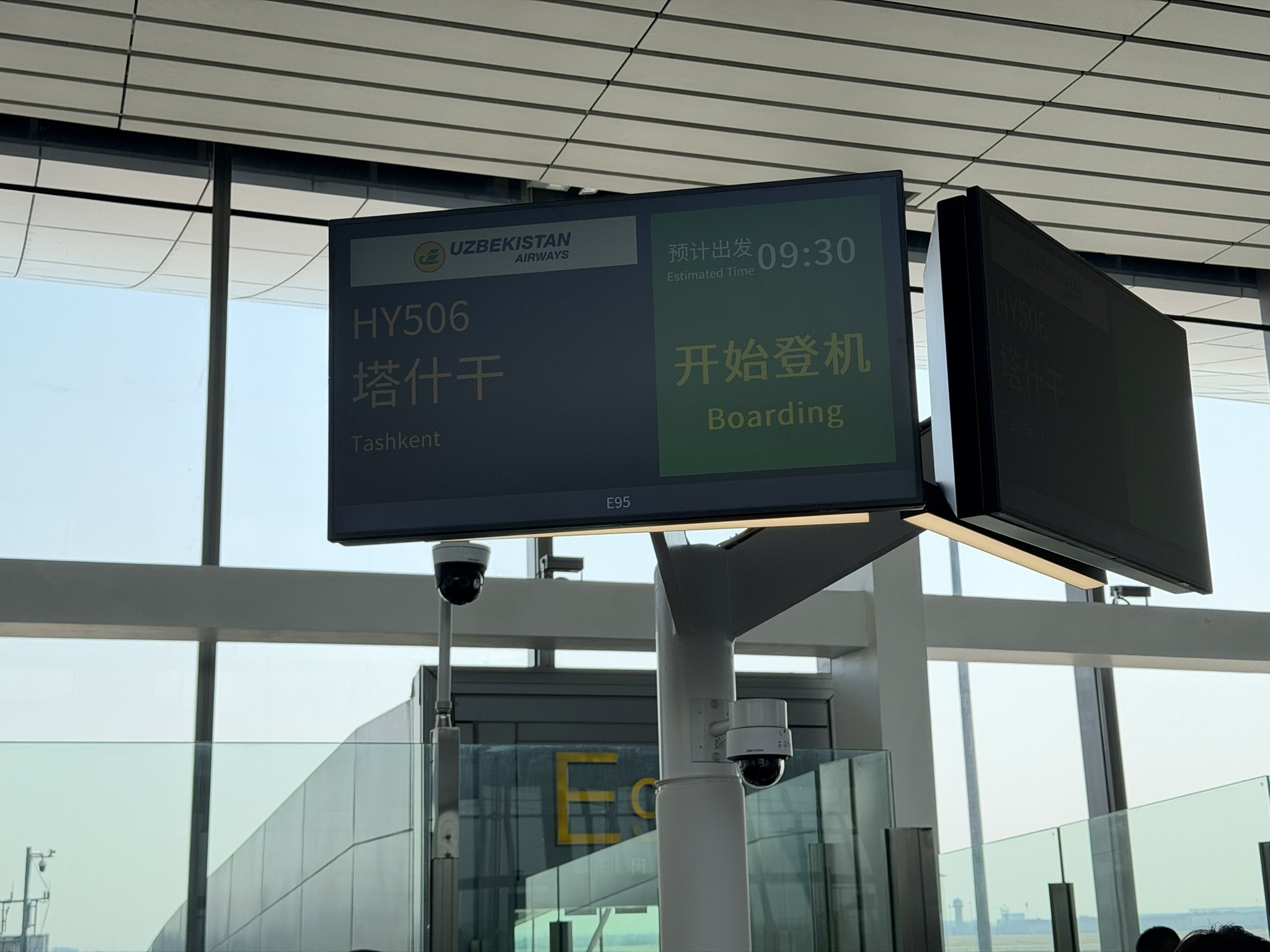
I’ll be attending IOI 2026 and arriving in Tashkent in about 8 hours. If you see me around, feel free to say hi, give me a hug, or come chat with me about the latest stories from QOJ and the Universal Cup, especially if I am lucky enough to be available with free time.
In the mean time, don't forget to do the Prediction Game, check the Schedule, or leave anything in comments about what you'd like to say for IOI 2026. Of course, I won’t be able to write or comment on anything, but nobody can stop me from giving you a little cyan fish badge if I managed to get some...😈
Hope everything goes smoothly at this IOI, hope we won’t get boiled by Tashkent’s weather, and I’m looking forward to seeing all of you there~
The 4th Universal Cup Semifinals: How to submit your tasks
By
Qingyu
Interested in submitting your tasks? Great! We sincerely thank your contribution to the Universal Cup!
Before submitting, you need to have an account on QOJ and properly protect your password. You should submit all your proposals at https://qoj.ac/proposals. All your task materials will be uploaded using your account, and you will receive notifications and feedback from us within the system only.
The submission deadlines
We have two submission cycles this year. Although we do not place any disadvantages on late proposals, we strongly recommend you submit your tasks as early as possible so we can provide a more detailed review of each of your task proposals.
| Stage | Submission Deadline | Decision Notification |
|---|---|---|
| 1 | July 1, 2026 | Late July, 2026 |
| 2 | August 1, 2026 | Early September, 2026 |
| 3 | September 1, 2026 | Late September, 2026 |
The final deadline to submit your tasks is September 1, 2026. Late submissions might not be reviewed.
Things need to be prepared
After clicking the "New Proposal" button, you will receive a dedicated submission page for your proposal only. If you need to submit multiple tasks, you must create multiple proposals independently.
In the proposal management page, you need to upload your problem statements, a brief editorial, and a list of conflicts. Each text box provides you with a simple Markdown editor (so you can use $\binom{n}{m}$ or **two** to format your task content). All materials you submitted must be written in either English or Chinese.
Problem Statement
The problem statement should contain the core idea of your task proposal. You do not need to come up with a funny background or detailed definitions. You may submit a formal camera-ready statement if available, but it is fine to just write a few sentences to describe what you would like to ask in this task. Be sure to include constraints in the problem statements — it is fine to just have an approximation; you can change them when preparing your tasks if accepted.
Other sections like input format or example explanations are not required, but you may add them if you find they are helpful for the reviewers to understand your task.
If you need to include figures or any auxiliary files, DO NOT STORAGE THEM ON THIRD-PARTY PUBLIC SERVICES! Do not use Google Docs, public image hosting services, or blogs/forums that can be easily visited by other users.
Brief Editorial
A brief editorial is a required component of your task submission. The brief editorial should describe the intended solution to your task, and you may include any alternative or suboptimal solutions in your editorial.
The editorial is used to help the reviewers better understand your proposal. Reviewers are all experienced competitive programmers, so you may utilize any well-known tricks without detailed explanation. You do not need to write every proof of the lemmas you used, but you should keep your editorial informative to the reader.
It is fine if you are not sure your approach will be optimal for this problem. When reviewing your proposals, our reviewers will first come up with their own solutions, and multiple reviewers will work with admitted tasks to see if any improvements could be made for the task.
Furthermore, if your idea comes from a paper or other tasks, you should also list them in the editorial section. You may also list any additional comments in the editorial section.
List of conflicts
Security is the top concern we have in our selection process. You have to list anyone, including non Universal Cup contestants, who knows any parts of your task proposals. BE SURE TO MAKE YOUR CONFLICT LISTS COMPLETE BEFORE SUBMITTING YOUR TASKS.
We understand that your tasks might have been proposed to other competitions, and this is common in the competitive programming community. You are required to report all the trainings/contests/competitions you have submitted your tasks to, no matter online or offline, school trainings or international championship.
You should also list all the platforms you used to store or create your tasks, such as GitHub, Polygon, Libre OJ private tasks, Google Docs, Discord Private Message, etc. This will help us to know the context of your task proposal and evaluate the security of your task proposals.
You have to list everything on your best effort. If you are not sure about any conflicts, just list them. Listing more conflicts will not negatively affect your proposal.
The evaluation process
After finishing all parts of your proposal, you need to make sure that you have switched the status of your proposal to "ready for review". Once you marked ready, we will hide the task content to everyone from the proposal page, so that we could reduce the risk of leaking a proposed task. As such, you will be unable to make any changes to that proposal after clicking ready. If you do need to make any changes after submitting your proposal, you need to send an email to [email protected] with details of your proposals.
Following this, our task reviewing team will begin working with your proposal. Your proposal will only be visible to our task reviewing team and dedicated reviewers. If your proposal is not accepted, we will inform you the list of the people who has reviewed your task, and you may submit any unaccepted proposals to any other competitions.
The Problem Selection Committee (PSC) is responsible for reviewing all submitted tasks. The members of the PSC, including its Chair, are appointed by the Chair of the Scientific Committee (SC).
For the 4th Universal Cup Semifinals, the PSC consists of:
- Qingyu Shi (Chair)
- Bingpei Li
- Jiangqi Dai
- Junlin Ye
- Lingyu Jiang
- Yuhao Du
- Yaohui Zeng
- Yichen Li
- Yanru Guan
- Yaowei Lyu
- Zexu Shi
- Zeyue Wu
- Zhiyuan Ge
- Zixuan Yan
- Zonghan Yang
All admitted contest tasks require approval from the Scientific Committee (SC). Each PSC meeting will be attended by the task reviewers and SC members. Task reviewers and other PSC members are welcome to share their comments and recommendations during the meeting, but the final decision-making authority rests solely with the Scientific Committee.
Q&As
Q: What types of tasks are you accepting?
A: We accept a wide range of task types. We do not have a strict syllabus for our competition, and you may submit tasks on all kinds of topics. Besides classical batch tasks, you can also submit interactive tasks, communication tasks, output-only tasks, or any other innovative task types! Our Technical Committee will coordinate with the Scientific Committee to ensure your task can be properly judged.
Q: Is there any hard limit for judging?
A: The memory limit for a task must not exceed 4 GiB, and we strongly recommend keeping it at 2 GiB whenever possible.
There is no strict upper bound on the input size or time limit. However, we may be unable to use a task if our judging infrastructure cannot provide stable and responsive evaluation for participants. As a general guideline, we recommend that for more approachable problems the total size of all test cases stay within 200 MiB and the time limit within 5 seconds per test case.
Q: Do you accept easier tasks?
A: Sure! In fact, we especially struggled with deciding on the easier part of the problem set when doing previous problem-settings. Creating a great easy task is hard, and we definitely want to hear your ideas.
Q: How many tasks may I submit?
A: There is no limit on the number of tasks you can submit, and we do not have a quota on the number of tasks to be used by a single author. In fact, we once had a single author propose dozens of tasks, and five of them were ultimately admitted.
Q: Do you have any preferences on task styles or topics?
A: No. We have no preferences or quotas on any specific topics. We might propose zero or even four geometry tasks, all depending on the context of the whole contest pool. However, our primary goal for the contest is to create a diverse tasks pool and a balanced problem set with appropriate amounts of thinking and implementation. Some topics, like data structures and combinatorial counting, receive far more proposal submissions than others, making the selection process for these topics extremely competitive. We encourage you to try a more innovative field, and we especially value tasks with deep insight and creativity over advanced knowledge.
Q: What is the definition of "advanced knowledge"? Can I propose a task involving advanced algebra? What about implementing an algorithm mentioned in some FOCS paper?
Q: Again, we do not have a strict syllabus or constraints in our problem-setting process, and everything will be evaluated holistically based on your task approach and the context of the whole contest pool. In our tasks selection process, insight and creativity are the most important factors. A task relying purely on advanced knowledge with no underlying insights might not fit our contest goals. If you decide to propose a task using uncommon competitive programming tricks or advanced techniques, it is best to include more intuitive thoughts or ideas that go beyond the core techniques themselves.
Q: Do you have any examples of good tasks you are looking for?
A: We accept all kinds of tasks. We are not a single-thematic or purely ad-hoc contest, so we cannot really give a definition on what is a good task. Even if you feel your task is not great, it might still be accepted if it fits the needs of our pool. Therefore, submit your task if you are interested.
Q: I want to be an onsite judge. Can I have a spot if my tasks were accepted?
A: We sincerely welcome anyone who wishes to join our judges team. You can apply to be an onsite judge after the problem selection process, and the details will be confirmed after our tasks selection process.
Q: I have more questions...
Q: You can contact me via [email protected].
The 4th Universal Cup Semifinals: Call for tasks
By
Qingyu
Update: We have extended the deadline of call for tasks.
On behalf of the Universal Cup, I am pleased to announce the Call for Tasks for The 4th Universal Cup Semifinals.
The 4th Universal Cup Semifinals serves as a qualifying contest to select the teams that will advance to The 4th Universal Cup Finals.
We anticipate selecting 10-15 high-quality tasks to create a contest experience comparable to The 3rd Universal Cup Semifinals. Previous Universal Cup Semifinals/Finals competition tasks can provide a good guide on the desired composition of tasks. You may check them here, here, here, and most recently here.
We sincerely welcome everyone who is not competing in the Semifinals to submit their tasks. This is a unique opportunity to share your problems with the strongest competitors in the community. Furthermore, selected task writers may be qualified to apply the contributors slots for The 4th Universal Cup Finals.
To submit your task, you must create a proposal and upload all task materials directly to our proposal management system: https://qoj.ac/proposals. This is the only valid method for task submissions. Please do NOT submit your tasks via emails, Discord messages, private messages, or any other channel. A detailed submission guide is given here. The deadline for the Call for Tasks is September 15th, 2026 23:59:59 (AoE Time)
We look forward to seeing your tasks contribute to The 4th Universal Cup Semifinals!
PAIO 2026: Call for Tasks
By
Qingyu
The Pan African Informatics Olympiad 2026 (PAIO 2026) will take place from July 23 to 30, 2026.
The PAIO 2026 Scientific Committee invites members of the programming contest community to submit tasks for the competition. Submitted tasks should be novel, well-defined, and suitable for secondary-school contestants. All tasks must be original, must not have been used in any previous competition, and should fall within the IOI syllabus.
For more details about the call for tasks and submission guidelines, please visit the official PAIO Call for Tasks page. The submission deadline is June 15, 2026.
For any questions, please contact tasks [at] panafricanio.com.
The 3rd Universal Cup Finals: Analysis Report
By
Qingyu
The 3rd Universal Cup Finals: Analysis Report
This is the draft of the problems of the 3rd Universal Cup Finals. We expect to officially release a version of this document in a few months. If you find an error, please send an e-mail to [email protected] or a private message to me (@Qingyu) about it.
The 3rd Universal Cup Finals Warm Up Game & Prediction Game
By
Qingyu
The 3rd Universal Cup Finals Warm Up Game
The Universal Cup Finals is coming! To build excitement and get everyone in the spirit, we are launching a special Warm-Up Game for The 3rd Universal Cup Finals. The game will run in the lead-up to the Finals and is open to all Universal Cup participants and supporters.
Visit the game event at: https://qoj.ac/event/ucup-finals
How does the game work
Every participant starts with an initial 100 points. From there, you can earn — or wager — more points by taking part in the three activities below. Climb the leaderboard to win prizes from the Universal Cup!
1. Solve Problems
A set of problems will be regularly posted by the Scientific Committee (SC). These tasks come from a curated mix of sources:
- Past Universal Cup events
- Original problems authored by our SC or judges
- Problems recommended by task authors from the community
Each problem has an associated point reward. Browse the problem list, give them a try, and click the "Claim!" button once you've solved one to collect your points. Problems remain claimable for the entire duration of the warm-up, so you can solve them at your own pace.
You're welcome to discuss problems, read tutorials, or ask for help in the community — that's part of the fun. However, do not cheat by copying other people's code or submitting AI-generated solutions. The SC will review the leaderboard and inspect submissions, and anyone caught gaining points through cheating will be banned.
We understand that problems from recent Universal Cups, ICPC contests, and training camps may have been used as training material for contestants. To keep things fair, we will not use any problems from the 2024, 2025, or 2026 ICPC or Universal Cup contests.
2. Prediction & Betting
A series of prediction questions will be released throughout the warm-up period, covering contest outcomes, problem-solving statistics, and other Finals-related events.
- Place wagers from your point balance on the outcomes you believe in.
- Odds will be displayed for each option — higher odds reward bolder calls, while safer bets pay out smaller but steadier.
- Accurate predictions earn points proportional to your stake and the odds at the time of betting.
Whether you prefer careful analysis or bold gambles, the prediction board is your playground.
3. Additional Activities
You can also earn points by participating in various UCup-related activities — community challenges, live activities, and surprise events held in the run-up to the Finals. Further details will be announced in our future posts.
The 3rd Universal Cup Finals Prediction Game
Following our tradition, alongside the Warm-Up Game we are also hosting the UCup Finals Prediction Game. In the prediction game, you are asked to predict the final ranking of the top 12 teams of The 3rd Universal Cup Finals.
Make your predictions at: https://qoj.ac/voting_game/ucupf3/vote
The deadline to update your prediction is May 10th, 2026 at 10:00 (UTC +8) — that is, the start of the contest session.
Medal tiers at the Finals are:
- Gold: 1st ~ 3rd place
- Silver: 4th ~ 7th place
- Bronze: 8th ~ 12th place
You predict the 1st through 12th place teams. Each team can be nominated only once. For each team you nominate, let $r$ be its actual final rank and $R$ be the rank you predicted:
- Proximity: you earn $\max(0, 5 − |r − R|)$ points — full 5 points for an exact match, partial credit if you're within 4 ranks, 0 otherwise.
- Medal bonus: if you correctly predicted the team's medal tier (gold / silver / bronze), you earn an additional +3 points on top of rule 1.
- Champion bonus: if you correctly predicted the champion (1st place), you earn a further +2 points on top of rule 2.
Participants will be ranked first by their final score, then by the time of last edit — earlier edits rank higher in case of a tie. The final leaderboard will be posted after the contest is over.
共 84 篇博客